
Coping with Intrusive Thoughts: A Practical Guide for Therapists, Individuals, and Those Awaiting Professional Psychological Support
Recommended by doctors, the self-help eBook Thought Apartment delivers practical, evidence-based strategies for managing unwanted and repetitive thoughts. This resource is ideal for therapists, individuals seeking self-help, and anyone waiting for a therapy appointment or professional mental health consultation. Start finding relief from obsessive and distressing thoughts – right now.
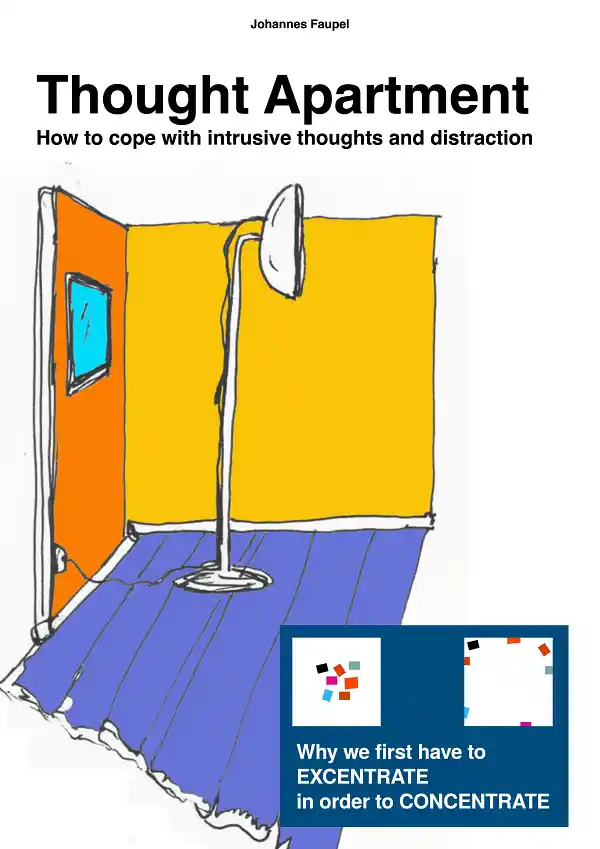
Thought Aparatment Johannes Faupel – E-Book
Anyone struggling against unwanted, intrusive, and distressing thoughts may unintentionally make these thoughts even stronger. That’s because the more energy and attention we focus on these intrusive thoughts, the more persistent they can become.

Specifically Developed Book for Confidently Managing Intrusive Thoughts
Thought Apartment is a systemic and hypnosystemic approach that utilizes the principles of metacognition. This method empowers individuals to respond to intrusive thoughts with greater confidence and self-control.
Read more about the scientific background here.
This website provides information for educational purposes and self‑help. It is not a substitute for professional medical advice, diagnosis, or treatment. If your thoughts are significantly impairing your life, consult a qualified mental health professional.
This is an informative self-help e-book for mental health. “Thought Apartment” introduces a mental model designed to support self-help and counseling for managing intrusive thoughts. While this e-book cannot replace psychotherapy, it can offer meaningful support alongside professional treatment.
“Thought Apartment” does not teach you to fight intrusive thoughts – there’s a more effective way. (Supported by scientific research)
Instead of encouraging a (usually futile) struggle against your thoughts, this guide invites you to create an inner “junk room” as a mental strategy.
Excerpt from “Thought Apartment,” Chapter: The Junk Room
The Junk Room
Until recently, I would have avoided this next room entirely – perhaps even denied its existence. But now that I’ve settled into my Thought Apartment, I’ll let you take a look inside. Step right in: this is my junk room. Here live the thoughts I once tried to eliminate, but never could. Like persistent mosquitoes, these thoughts used to buzz endlessly at the center of my attention, constantly “biting” and distracting me – so I was always scratching some mental itch (recurring unwanted thoughts) that kept me from the thoughts I wanted or needed.
By “mosquitoes,” I mean those annoying, absurd, or distressing thoughts that seemed to appear out of nowhere and caused me a great deal of frustration. “How can you even think such a thing?” I used to scold myself – but that only cemented the thought even more deeply in my mind. The more I tried to drive out unwanted thoughts by force, the more at home they became –blocking my mental space, pulling faces, and using harsh words.
Once you finish reading the chapter “The Junk Room,” the next steps become surprisingly clear.
Buy the “Thought Apartment” eBook here for $9.97 USD (including VAT, if applicable in your country)
14-day money-back guarantee – no questions asked
Your Situation Today – Too Many Overwhelming Thoughts at Once?

People affected by intrusive thoughts often describe feeling overwhelmed by a relentless stream of thoughts. The brain becomes overloaded and interprets this mental activity as threatening or unsafe. It’s understandable: imagine spinning around ten times in a row with your arms stretched out. Children sometimes do this playfully—as I did in my own childhood. What happens? You become dizzy because your brain loses its reference points for orientation in space.
Your Situation with “Thought Apartment” – Mentally More Organized
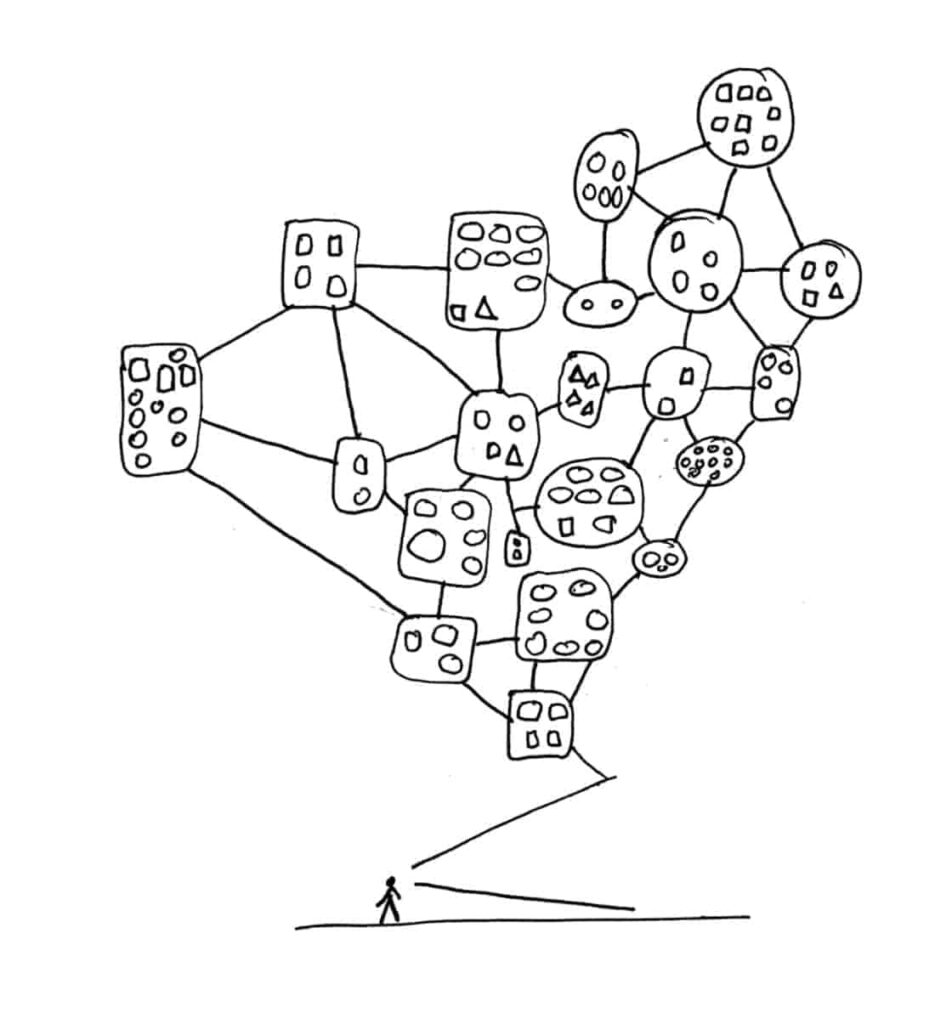
Even the wildest thought loses its threatening meaning—and thus its power—when you are able to observe it from a distance. For example, imagine a photograph of a tiger, mouth wide open, ready to leap. If that photo is in a book about African wildlife, you can simply close the book and put it back on the shelf. This is the basic principle behind the “Thought Apartment” model.
The goal is not to erase all images of predators (“fighting thoughts”) or to immerse yourself in a virtual predator enclosure with 3D animation (“exposure training”), forcing yourself to endure imaginary attacks and “learn” that it’s more reasonable not to be afraid. The brain does not operate on reason alone—it is programmed for survival, and it works with images. These principles are at the heart of the systemic approach used in “Thought Apartment.” Here is why also doctors and therapists recommend “Thought Apartment.”
Overcoming Intrusive Thoughts – What Readers of Thought Apartment and Practitioners, Including Doctors, Say About These Techniques
Recommendation from Dr. Heiner Lachenmeier, M.D.

“Wonderful insights in your Thought Apartment concept. It fits perfectly with ADHD—clear, practical, and truly relieving.”
Dr. Heiner Lachenmeier, M.D.
Recommendation from Dr. Gudrun Birk, M.D.

“This little book can quickly bring relief to people struggling with intrusive thoughts. Its simplicity allows you to tap directly into a fundamental brain function.”
Dr. Gudrun Birk, M.D.,
SE-Birk.de
Recommendation from Christian Stocker

“Johannes Faupel’s book ‘Thought Apartment’ can help you gain greater perspective on your thought world and strengthen your ‘Inner Observer.’”
Christian Stocker, MBSR Instructor – Abenteuer-Achtsamkeit.de
Recommendation from Torsten Sochorick

“Several of my clients in systemic therapy and neurofeedback have already benefited from insights I shared from Johannes Faupel’s book. It’s a refreshingly simple and easy-to-apply concept.”
Torsten Sochorick, Systemic Therapist and Neurofeedback Specialist, Schopfheim – Vivum-Therapie.de
What Are Intrusive Thoughts?
- Cognitive Intrusions (unwanted thoughts or mental images)
- Affective Intrusions (emotional or mood-based intrusive experiences)
- Sensorial Intrusions (unwelcome sensations or perceptions)
- Violence-Related Intrusions (disturbing violent thoughts or urges)
- Sexual Intrusions (unwanted sexual thoughts or images)
- Moral and Cultural Intrusions (intrusive thoughts related to values, ethics, or cultural norms)
What Do Intrusive Thoughts Feel Like?
- Suddenness and Unwanted Nature
- Repetitiveness and Intensity
- Emotional Distress and Suffering
- Sense of Losing Control
Why Does “Thought Apartment” Work?
“Thought Apartment” creates a safe internal space for action and reflection.
Thoughts are neither fought against nor suppressed; instead, they become observable and flexible.
This approach aligns with current psychological principles, while remaining intuitive and practical for everyday life.

Thought Aparatment Johannes Faupel – E-Book
Take the first step toward regaining mental clarity and control over unwanted thoughts.
Purchase the “Thought Apartment” eBook now and discover practical strategies to overcome intrusive thoughts.
Scientific Background of “Thought Apartment”
While the “Thought Apartment” principle itself has not been scientifically studied, it fits well with what research reveals about mental control, attention regulation, and working memory in the context of intrusions. These mechanisms help explain why a vivid organizational or apartment metaphor can support people in stepping out of intrusive thoughts.
What are the central processes in the brain during intrusions?
1. Inhibitory Control over Memories and Thoughts
– People can actively suppress the retrieval of unwanted content (“retrieval suppression”). This is based on a network involving the right dorsolateral/ventrolateral prefrontal cortex and the hippocampus (Anderson et al., 2025; Schmitz et al., 2017).
– GABA inhibition in the hippocampus is crucial: higher GABA levels are linked to a better ability to stop unwanted memories and dampen hippocampal activity (Schmitz et al., 2017).
– Individual differences in this ability to control predict how distressing intrusions are experienced after trauma; better suppression ability → less distressing intrusions (Streb et al., 2016).
What do these scientifically established facts mean for applying the “Thought Apartment”?
A clear inner organizational model (rooms, doors, “storage room”) provides a mental framework in which these inhibitory processes can be deliberately utilized: “This scene belongs in this room, now I close the door and consciously move to another room.”
2. Executive Functions and Working Memory
– Poor inhibitory control (as part of executive functions) is associated with the persistence of intrusive thoughts in depression, anxiety, and PTSD (Bomyea & Amir, 2011).
– Training executive functions/working memory can improve the ability to reduce intrusive thoughts during suppression tasks (Bomyea & Amir, 2011).
– In PTSD, certain deliberate regulation strategies (e.g., avoidant suppression) increase intrusions, especially when executive capacity is low (Bomyea & Lang, 2016).
Applying this to the “Thought Apartment” principle
“Thought Apartment” structures attention and working memory (“What am I focusing on right now?”). By repeatedly practicing placing thoughts in certain “rooms” and then leaving those rooms, attentional and inhibitory control is trained. This helps reduce the stickiness of intrusive thoughts.
3. Attention Regulation and Metacognition
– Targeted attention training (Attention Training Technique) significantly reduces the frequency of intrusive thoughts after exposure to a stress narrative (intrusive thoughts, rumination) and increases subjective attentional flexibility (Nassif & Wells, 2014).
– Mindfulness/aware consciousness is associated with fewer intrusions and a better ability to downregulate their occurrence over time; this effect depends on baseline inhibitory ability (Ashton et al., 2023).
Applying these scientific insights to the Thought Apartment model
The apartment metaphor facilitates metacognition (“Where am I with my attention inside my apartment right now?”) and supports flexible shifting of attention (“I leave the intrusion room—the storage room—and go back to the study.”).
4. Competition in Working Memory via Alternative Images/Tasks
– Meta-analyses show: cognitive tasks, especially those using visual-spatial resources (e.g., Tetris, other imagery-based tasks), can reduce the intrusive reappearance of trauma images (Asselbergs et al., 2023; Varma et al., 2024; Kanstrup et al., 2021; Badawi et al., 2020).
– The “Elaborated Intrusion Theory” emphasizes that intrusions become strong through vivid imagery; competing visual content interferes with this elaboration (May et al., 2015).
Applying this to the Thought Apartment principle:
The Thought Apartment itself is a powerful alternative mental image. When an intrusion arises, a person can actively call up the image of the apartment, particular rooms, furniture, or pathways. This occupies the same visual resources that the intrusion would require, weakening its impact.
What does research specifically show about intrusions, trauma, and future anxiety?
– Cognitive models see intrusions as a central node driving many other symptoms (avoidance, hyperarousal, etc.); targeted work on intrusions can trigger a “therapeutic cascade” (Iyadurai et al., 2019; Varma et al., 2024).
– After trauma, intrusions can be reduced by short, easily deliverable cognitive interventions in emergency rooms; effects lasted up to 5 weeks and were linked with improved functioning (Kanstrup et al., 2021).
– Repeated successful suppression of future fear images reduces their intrusion frequency and associated anxiety (Ashton et al., 2023).
How can the effects of the Thought Apartment principle on intrusions be scientifically explained?
– The brain has trainable control and inhibition mechanisms that can actively weaken and make intrusive thoughts less frequent (Ashton et al., 2023; Asselbergs et al., 2023; Varma et al., 2024; Kanstrup et al., 2021; Bomyea & Amir, 2011; Streb et al., 2016; Anderson et al., 2025; Schmitz et al., 2017).
“Thought Apartment” is a vivid, everyday metaphor that makes exactly these abilities accessible:
– Locating and limiting content (hippocampal/memory control) (Anderson et al., 2025; Schmitz et al., 2017),
– Flexibly redirecting attention (Ashton et al., 2023; Nassif & Wells, 2014),
– Occupying working memory with alternative images (Asselbergs et al., 2023; Varma et al., 2024; May et al., 2015),
– Strengthening executive control through repeated practice (Bomyea & Amir, 2011; Strålin et al., 2025).
This explains why people with intrusions can learn, with such a model, to step out of intrusive thoughts—even though the specific “Thought Apartment” concept itself has not yet been scientifically studied.
Scientific Studies to Understand the Thought Apartment Approach Neurologically and Psychologically
Ashton, S., Sambeth, A., & Quaedflieg, C. (2023).
A mindful approach to controlling intrusive thoughts.
Scientific Reports, 13.
Iyadurai, L., Visser, R., Lau-Zhu, A., Porcheret, K., Horsch, A., Holmes, E., & James, E. (2019).
Intrusive memories of trauma: A target for research bridging cognitive science and its clinical application.
Clinical Psychology Review, 69, 67–82.
Asselbergs, J., Van Bentum, J., Riper, H., Cuijpers, P., Holmes, E., & Sijbrandij, M. (2023).
A systematic review and meta-analysis of the effect of cognitive interventions to prevent intrusive memories using the trauma film paradigm.
Journal of Psychiatric Research.
Varma, M., Zeng, S., Singh, L., Holmes, E., Huang, J., Chiu, M., & Hu, X. (2024).
A systematic review and meta-analysis of experimental methods for modulating intrusive memories following lab-analogue trauma exposure in non-clinical populations.
Nature Human Behaviour, 8, 1968–1987.
Kanstrup, M., Singh, L., Göransson, K., Widoff, J., Taylor, R., Gamble, B., Iyadurai, L., Moulds, M., & Holmes, E. (2021).
Reducing intrusive memories after trauma via a brief cognitive task intervention in the hospital emergency department: an exploratory pilot randomised controlled trial.
Translational Psychiatry, 11.
Bomyea, J., & Lang, A. (2016).
Accounting for intrusive thoughts in PTSD: Contributions of cognitive control and deliberate regulation strategies.
Journal of Affective Disorders, 192, 184–190.
Nassif, Y., & Wells, A. (2014).
Attention training reduces intrusive thoughts cued by a narrative of stressful life events: a controlled study.
Journal of Clinical Psychology, 70(6), 510–517.
Badawi, A., Berle, D., Rogers, K., & Steel, Z. (2020).
Do Cognitive Tasks Reduce Intrusive-Memory Frequency After Exposure to Analogue Trauma? An Experimental Replication.
Clinical Psychological Science, 8, 569–583.
Bomyea, J., & Amir, N. (2011).
The Effect of an Executive Functioning Training Program on Working Memory Capacity and Intrusive Thoughts.
Cognitive Therapy and Research, 35, 529–535.
Ashton, S., Smeets, T., & Quaedflieg, C. (2023).
Controlling intrusive thoughts of future fears under stress.
Neurobiology of Stress, 27.
Streb, M., Mecklinger, A., Anderson, M., Johanna, L., & Michael, T. (2016).
Memory control ability modulates intrusive memories after analogue trauma.
Journal of Affective Disorders, 192, 134–142.
Strålin, E., Thorell, L., Lundgren, T., Bölte, S., & Bohman, B. (2025).
Cognitive behavioral therapy for ADHD predominantly inattentive presentation: randomized controlled trial of two psychological treatments.
Frontiers in Psychiatry, 16.
Anderson, M., Crespo-García, M., & Subbulakshmi, S. (2025).
Brain mechanisms underlying the inhibitory control of thought.
Nature Reviews Neuroscience, 26, 415–437.
May, J., Kavanagh, D., & Andrade, J. (2015).
The Elaborated Intrusion Theory of desire: a 10-year retrospective and implications for addiction treatments.
Addictive Behaviors, 44, 29–34.
Schmitz, T., Correia, M., Ferreira, C., Prescot, A., & Anderson, M. (2017).
Hippocampal GABA enables inhibitory control over unwanted thoughts.
Nature Communications, 8.